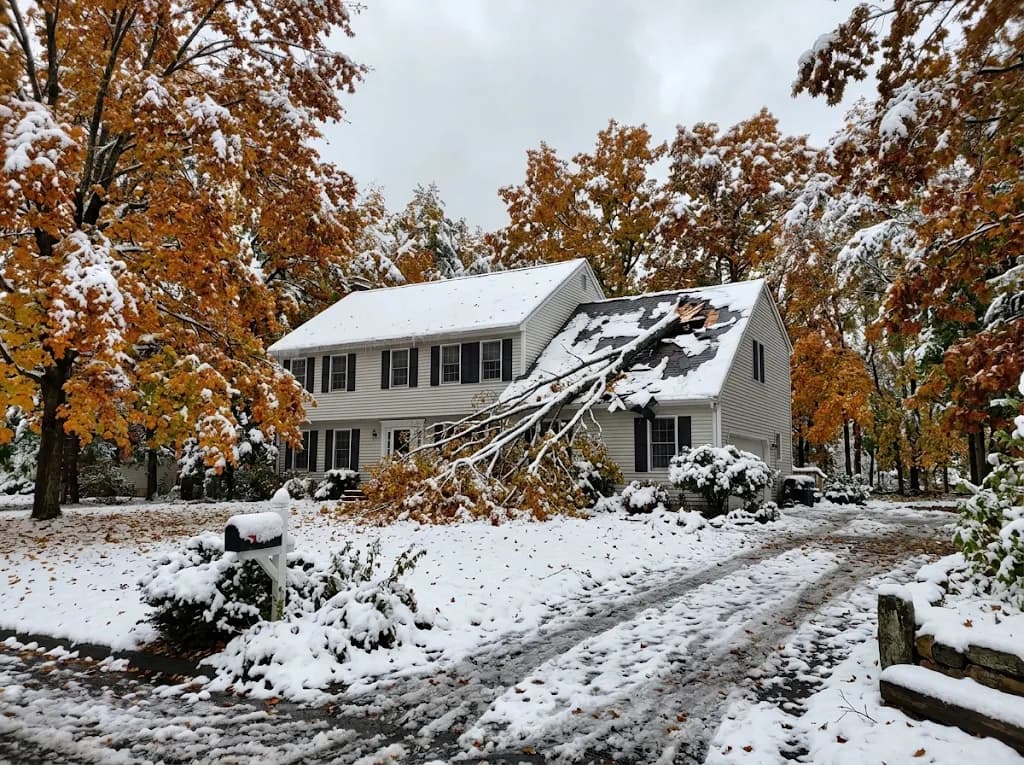
Connecticut roofs take storm damage in a few distinct ways. Nor’easters bring wind and heavy wet snow. Summer thunderstorms bring hail and downbursts. And the region has a long memory of storms that broke trees: in the October 2011 nor’easter, snow fell on trees that still had their leaves, bringing down limbs and whole trees across the state, and a state report put Connecticut power outages at roughly 830,000 customers. Windsor still remembers the F4 tornado of October 3, 1979, which started in Poquonock and destroyed dozens of homes.
Signs a storm-damaged roof needs replacing
- Missing shingles across several areas of the roof, not just one spot
- Creased or lifted shingles that no longer lie flat, a sign the seal strips have let go
- Hail bruising: dark spots where granules were knocked off, soft to the touch
- A tree or large limb that punctured the deck or cracked rafters
- Water in the attic or on ceilings after the storm
If the roof was already near the end of its life, storm damage often tips the decision toward full replacement. That is a conversation to have with both the roofer and the adjuster.
How the process usually goes
- Make the house safe. Get a tarp on any opening and keep receipts. If a tree is involved, a tree service may need to remove it first.
- Photograph everything. Wide shots of each side of the house, close-ups of damage, ceilings and the attic. Date-stamped photos help.
- Report the claim. Note the claim number and the adjuster’s name.
- Get a roofer’s inspection. A roofer can document damage the adjuster might not walk the roof to see.
- Compare the adjuster’s scope with the roofer’s findings. Differences are normal and can be discussed with the insurer.
- Sign a Connecticut-compliant contract. Written, signed by both sides, with the HIC registration number and a notice of your right to cancel.
Matching and partial replacements
When only one slope is damaged, insurers sometimes propose replacing just that slope. Whether new shingles will match the rest of the roof depends on the product and the age of the existing roof. Raise matching early, with photos, rather than after the work is done.
For the paperwork side, see how to check a Connecticut roofer before you sign.
Roof damaged in a storm? Call to talk with a local roofer about inspection and replacement.Mon–Fri 8:30 am–7 pm, Sat 9 am–4 pm (Eastern)
(844) 505-0987Questions homeowners ask
- Should I call the roofer or the insurance company first?
- Report the claim to your insurer promptly, as most policies require. Having a roofer inspect the roof and document the damage before or alongside the adjuster's visit is common, and many homeowners ask the roofer to be present when the adjuster comes.
- Can I sign a roofing contract before the claim is settled?
- You can, but read it carefully. Connecticut requires a written, signed contract with a notice of your right to cancel through the third business day. Be cautious of any agreement that commits you to a contractor before you know what the claim covers.
- What should I watch out for after a big storm?
- Out-of-state crews that knock on doors after storms, requests for large cash deposits, and pressure to sign on the spot. Check any roofer's Connecticut Home Improvement Contractor registration before signing, and pay deposits with a traceable method.