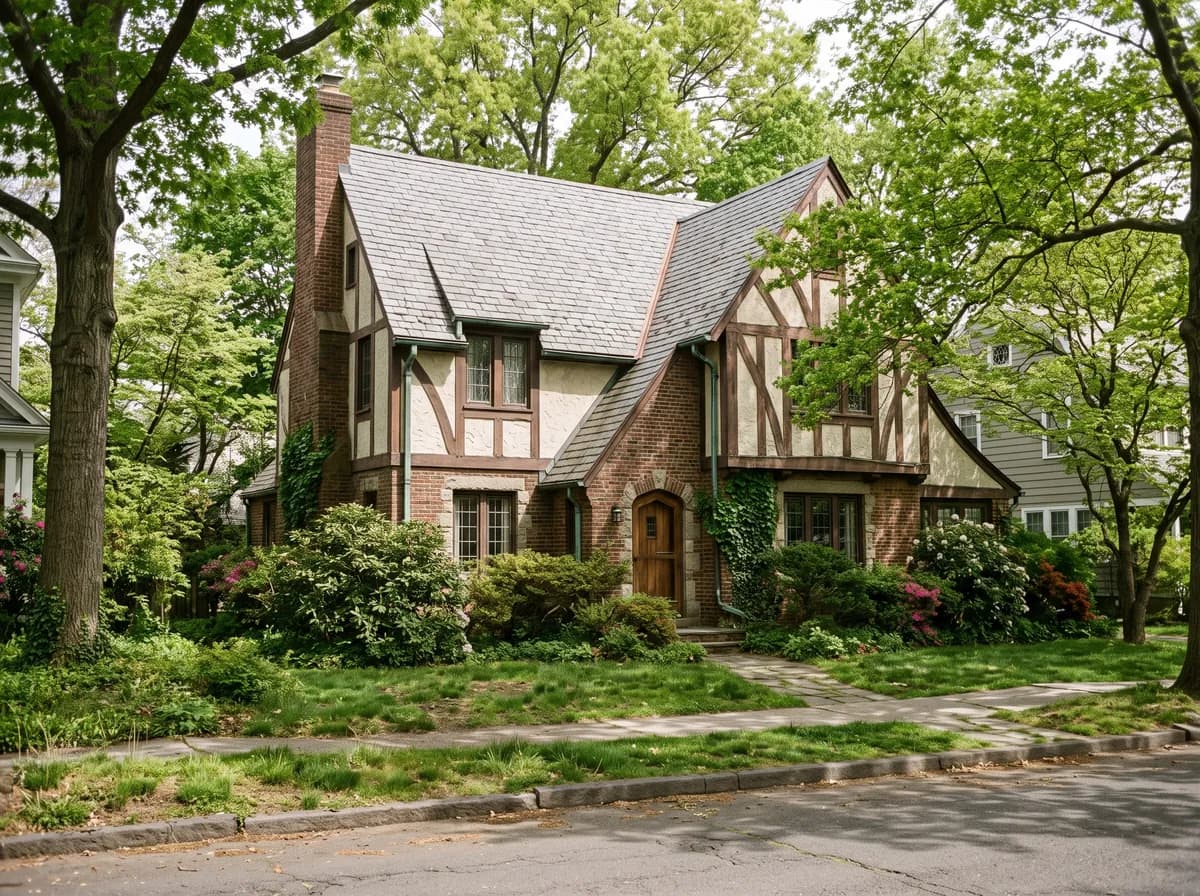
Slate is the roof of Hartford’s most famous old houses. Mark Twain’s house on Farmington Avenue had its purple slate roofs rebuilt in a 1999 restoration, and in West Hartford’s West Hill Historic District, a group of 25 architect-designed houses from the 1920s, 20 of the houses have slate roofs. Across Asylum Hill, the West End and the older parts of West Hartford, slate is still common on Tudors, Colonial Revivals and Victorians.
When a slate roof needs replacing, not reworking
Good slate can outlast several sets of nails and flashings. Many slate roofs that look tired really need new copper flashing and some slates swapped, which is outside what this phone line covers. A full replacement makes sense when:
- Large numbers of slates are delaminating, flaking or turning soft at the edges
- The nails have rusted through across whole sections, so slates slide out
- The deck under the slate has rotted from long-term leaks
- A previous owner patched the roof with tar and mixed materials until no clean rework is possible
A roofer who knows slate will tell you which situation you are in. Ask to see photos from the roof.
Three ways to replace it
New natural slate. The heaviest and longest-lived option. Hard slate from the major North American quarries is expected to last for many decades, and the right color can match the house exactly. It needs a crew that does slate work regularly.
Synthetic slate. Polymer or composite tiles shaped and colored like slate. They are much lighter, go on with ordinary roofing nails and are easier to find installers for. Quality and appearance vary a lot between brands, so look at an installed roof before choosing.
Architectural asphalt shingles. The most common choice when a slate roof is replaced on a house outside a historic district. Heavier “designer” shingle lines imitate the look of slate from the street.
Flashing, snow and copper
Slate roofs in this area usually come with copper valleys, copper step flashing and often copper gutters. A replacement should include new flashing, since old copper that has been bent, soldered and patched rarely seals well against a new roof. Steep slate roofs shed snow in sheets, so snow guards above entries, driveways and lower roofs are worth asking about.
Historic districts
Hartford, West Hartford, Wethersfield, Glastonbury, Windsor and Manchester all have historic districts. In a local historic district, changing roofing material normally requires a certificate of appropriateness before a building permit is issued. Our Hartford permit answer covers the steps, and the slate or asphalt answer helps with the choice.
Slate roof at the end of its life? Call to speak with a roofer who replaces slate and slate-look roofs in Hartford County.Mon–Fri 8:30 am–7 pm, Sat 9 am–4 pm (Eastern)
(844) 505-0987Questions homeowners ask
- Can new shingles be installed over an old slate roof?
- No. Under the residential building code used in Connecticut, an existing slate roof has to be removed before any new covering goes on. Slate is too uneven and too heavy to serve as a base for another layer.
- Does a house in a historic district have to keep slate?
- Not always, but a change from slate to another material usually needs approval from the local historic district commission before a building permit is issued. Commissions often look favorably on synthetic slate or architectural shingles in a slate-like color when real slate is not practical.
- Is synthetic slate lighter than real slate?
- Yes, much lighter. Natural slate is several times heavier than asphalt shingles, which is why switching a framed-for-asphalt roof to real slate needs a structural check. Synthetic slate products weigh far less and are installed with roofing nails much like shingles.